






5. Brighton Beach Baths

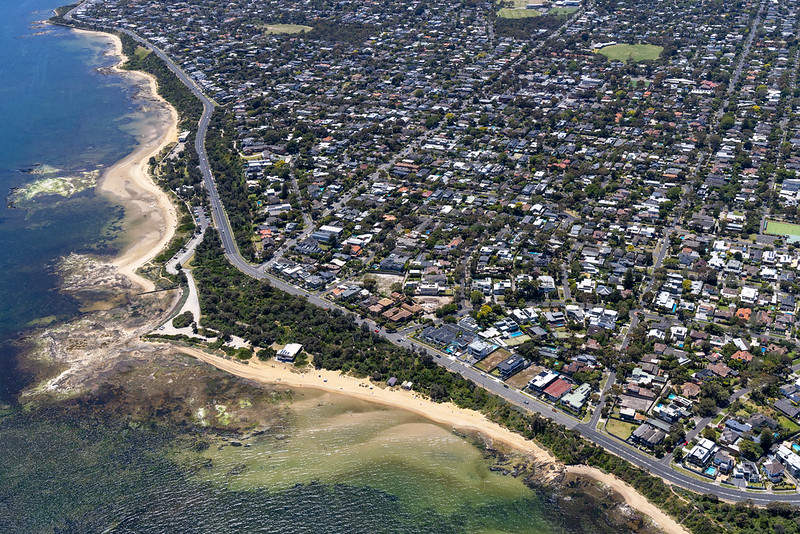
Brighton originally boasted two sea-baths, the Corporation Baths at Middle Brighton, and the Brighton Beach Baths at this site.

Captain Kenny’s Brighton Beach Baths opened about two years after the new railway had reached the nearby terminus in 1861. Whilst many preferred to promenade, ‘taking the ozone’, the benefits of bathing in the sea were being proclaimed and the sea-baths were considered the correct venue – bathing in the open during daylight hours being strictly prohibited. There was no mixed bathing; men bathed with a red flag flying as a warning to all, while a white flag signified ladies only. The baths were built off shore and were accessed by a wooden bridge. This was so bathers would not have to cross the sand clad only in bathing costumes, but could gain entry straight into the water.

In 1911 Edward Penny became the proprietor of the baths and ran them successfully until they were partially destroyed by the Brighton Cyclone in 1918. Both the baths and the buildings were wrecked and it is reported that the kiosk was washed right across Beach Road. The baths were rebuilt and reopened but were later wrecked again in the huge storm in 1934 which devastated much of the East side of Port Phillip Bay. This time the wooden buildings were replaced with brick and boasted a substantial manager’s residence upstairs. They were opened in 1939 with a grand carnival that attracted a large crowd. The baths were very popular and were widely used by schools for swimming lessons and sports events. Many local people began swimming after being awarded beginner’s certificates in the ‘Herald Learn to Swim’ campaign.

In the 1960s and 1970s the baths suffered from lack of patronage and a fire which destroyed much of the building. Brighton Council, facing rising maintenance and repairs costs, was unable to justify operating two public baths and decided to refurbish the ones at Middle Brighton and demolish the Brighton Beach Baths in 1979.

John Marshall, one of Australia’s most accomplished swimmers swam and trained at the baths. A champion swimmer for Haileybury College he held many Australian, United States and world records, and won silver and bronze medals at the Olympic Games in London in 1948. He was injured in a car crash in 1957 and died in Royal Melbourne Hospital. A plaque erected in his honour was a feature of the baths and this has been placed in the Middle Brighton Baths.