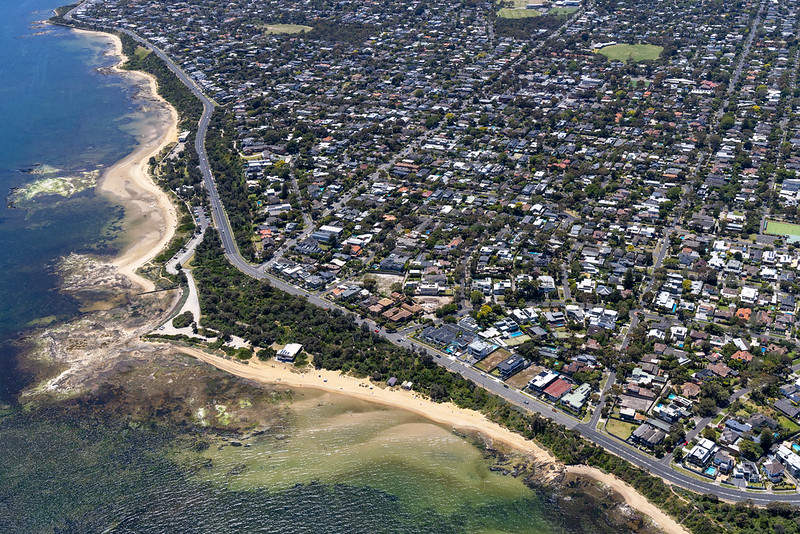







9. Half Moon Bay and the Red Bluff Cliffs

From the days of the Boonwurrung People to the present day, Half Moon Bay has been a valued fishing place, although in recent times there are far fewer fish and shell fish than in earlier years. Fred Pearce, son of Ollie Pearce a fisherman, recalled that one day in 1930 he went out to the ‘CERBERUS’ (the battleship sunk as a breakwater in 1926) and netted 80 boxes of fish which he sent to market.

Half Moon Bay has been popular with people who travelled from many parts of Melbourne for day picnics, and in earlier times with the holiday makers who regularly stayed at Black Rock in the summer months.

The sea wall in front of the Black Rock Yacht Club was constructed by Sustenance workers during the Great Depression of the late 1920s and early 1930s. The Life Saving Club is the successor to the smaller club - Black Rock Royal Life Saving Club - built in the early 1900s and the first of such clubs on the shores of Port Phillip Bay.

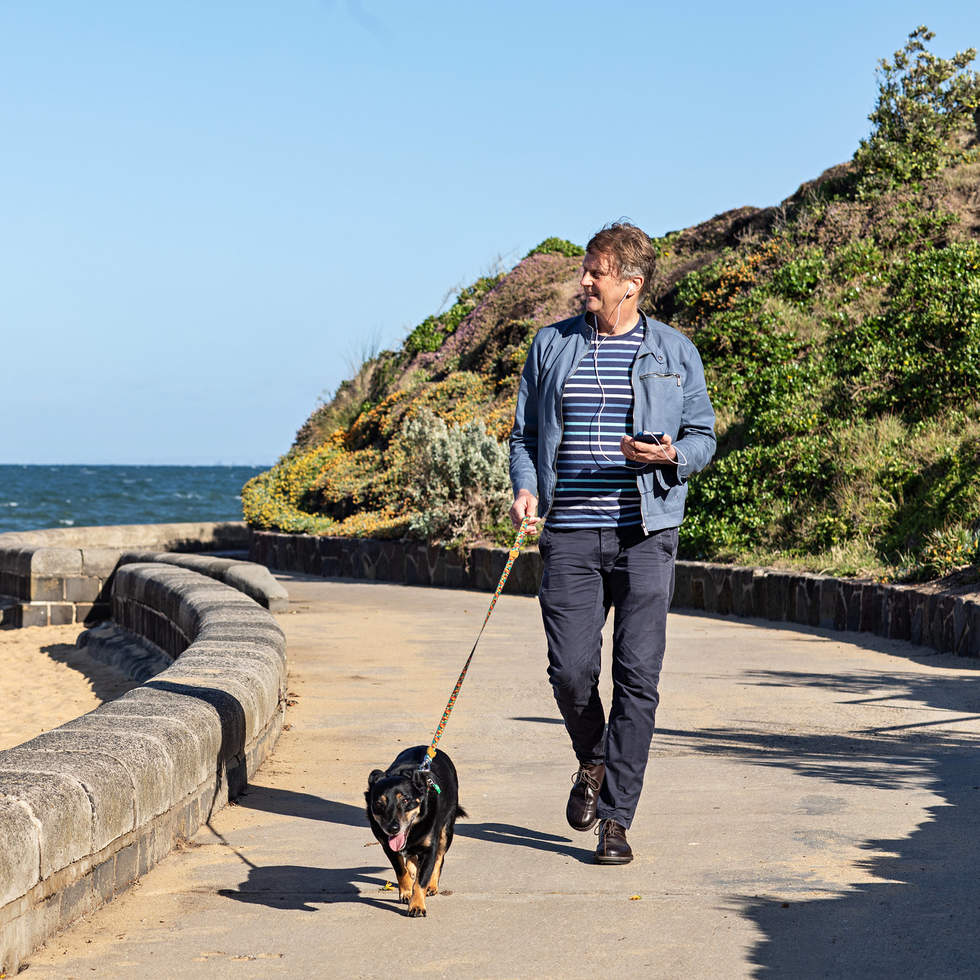
Artists, including the Australian Impressionist Walter Withers, have painted the sea and shore; and the former Sandringham and present Bayside Councils, assisted by volunteers, have planted indigenous trees and plants such as banksias and wattles in order to maintain the character of the foreshore.

Half Moon Bay shows evidence of the occupation of the Boonwurrung through the kitchen middens in the dunes, which contain shells and charcoal from cooking fires.

Painters, photographers and film makers have depicted the weathered desert-like cliff face of the Red Bluff, which stands at the northern end of Half Moon Bay and people of all ages have enjoyed climbing there (although this is now too dangerous because of possible falling rock). After the Great War (1914-1918) the Red Bluff was used as the location for a film about the Gallipoli landing.

Early pictures show that the Bluff once projected further out to sea but it has been affected by erosion. Run-off after heavy rain and people scrambling on the rock have contributed to the gullying. In the mid-20th century, unburnable rubbish, including car bodies, was dumped on the north side of the Red Bluff and much of it still lies under the grass and shrubs which have colonised the covering of soil. The unfortunate practice of dumping on the Bluff was stopped in 1964.

As a conspicuous landmark and the highest cliff (34 metres) on the borders of Port Phillip Bay the Red Bluff is an ideal place for the direction finder established beside the path at the summit.

Boonwurrung People for centuries drank from the rock wells at the base of the cliff, and there are stories of nineteenth century beach goers using the water too. One early resident told of a character who enlarged one well dipped out water which he boiled on a fire made on the beach, and then sold the water to visiting picnickers.