






|
Friends groups
The Friends of Bayside program is based on respect for Bayside's natural heritage.
The Friends of Bayside aim to:
- Promote community interest in the Bayside environment.
- Promote the understanding of the threats facing the Bayside environment.
- Promote and support community participation in the care of Bayside's environment.
- Provide a system for two-way communication between Bayside City Council and its environmentally active community.
Friends may be members of either site specific groups, special interest groups, or the Bayside Environmental Friends Network. New members are always welcome.
What Friends groups can I join in Bayside?
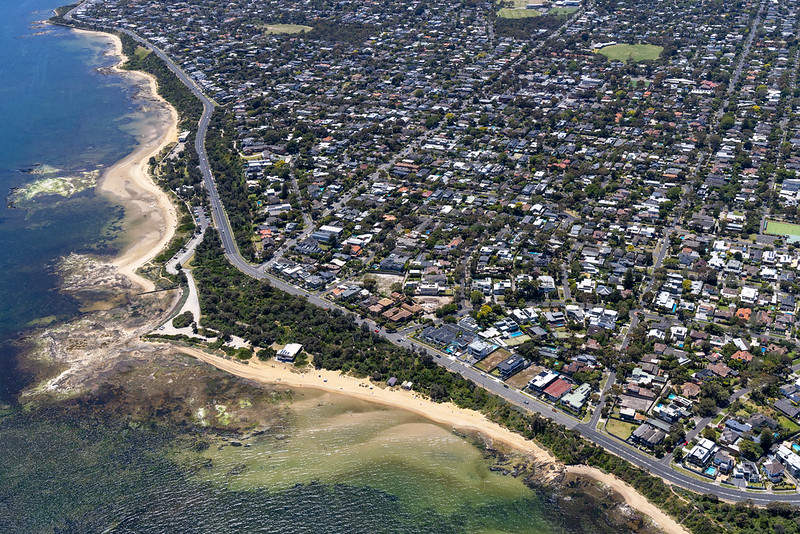
Friends have a variety of opportunities to be involved in. This includes working at the Bayside Community Nursery, on the foreshore and in the heathlands where activities can range from hand weeding, revegetation, litter collection, seed collection, pruning, assisting with controlled burns, native orchid maintenance, watering, plant propagation and guiding visitors through reserves. Friends are also active in parks and gardens.
- Bayside Community Nursery, Cheltenham
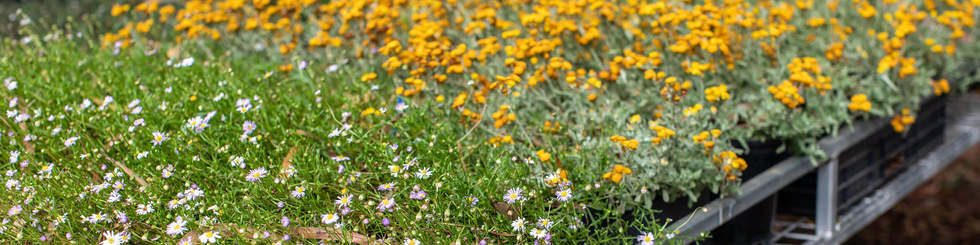
(Melway reference: 86 D1) The Bayside Community Nursery propagates local indigenous plants to provide trees, shrubs, grasses and ground covers to the public, landscapers, Bayside City Councils’ Parks Contractor/Service Provider, local golf courses and suburban gardens. Volunteer sessions and sales to the public are on Thursday and Saturday between 10am and 12pm. The nursery opened in the City of Sandringham days around the mid ‘1980's. The nursery grows only indigenous plant stock – all plants are propagated from locally native seed and/or cuttings. Contact: Carmen Skrobonja, T: 9583 8408
- Friends of Native Wildlife
The Friends of Native Wildlife (FONW) work throughout the entire Bayside area. We roam the 17 kilometres of foreshore, parks, heathlands, streetscapes, and waterways and interact with the flora groups as well. Since FONW's inception in 1996 the core group of members, often with help from hardy volunteers, have carried out survey work, supported PhD student studies, talked and worked with school students, both junior and senior, written articles for the Banksia Bulletin and followed up public queries which are passed on to them from council. We have successfully applied for grant funding also. There are monthly frog surveys with bat surveys to be introduced. A number of surveys, in conjunction with the council, have studied the occurrence of rakali, our local native water rat along the foreshore. Hair tube trapping of small mammals was conducted, also along the foreshore, through the assistance of a grant. Bird activity is constantly observed, including the Southern blue wren, bronze winged pigeon and mistletoe bird with all records being passed on to the Bird Atlas of Australia. Ever alert and watchful, the group also note blue tongue lizards, butterflies and some insects in relation to the surrounding vegetation they inhabit. Contact: Michael Norris, T: 9521 0804
- Balcombe Park, Beaumaris
(Melway reference 86 C4) Balcombe Park is approximately 3.4 hectares of land and contains good examples of indigenous heathland floral species and communities. It plays a key role in Bayside's bushland and open space network. The remnant heathland vegetation provides an attractive setting for a formal sportsground. The sportsground was originally a swamp and remnants of this section is being restored by the Friends group with wetland species. The ’Friends of Balcombe Park’ was formed in 1996 to care for the area burned by wildfire in 1991, which regenerated a substantial heathland community, in particular, the species Ricinocarpus pinifolius (wedding bush). Since then two ecological burns have taken place in 2001 and 2008. Over 40 heathland species have been recorded in the 2001 burn site, a number of which are rare species regenerated from the seedbank in the soil. A local field naturalist has also recorded a high diversity of fungi and lichens, one of which has not been recorded in other reserves. The Friends work to maintain the heathland by handweeding, planting and seed collection. Contact: Joan Couzoff, T: 9589 1060
- Bay Road Heathland Sanctuary, Sandringham
(Melway reference 77 B10) Bay Road Heathland Sanctuary is the nearest heathland to the Melbourne CBD and the largest in Bayside. Sheltered by trees, it is maintained so that people can enjoy the peace and wide variety of plants and animals using the narrow winding paths. Public access through the sanctuary is on Thursday each week and during the annual 'Spring Openings' and educational events. Contact: Michael Norris, T: 9521 0804
- Cheltenham Park Flora and Fauna Reserve, Cheltenham
(Melway reference 86 G1) Cheltenham Park Flora and Fauna Reserve is located in Cheltenham Park, off Park Road. It is approximately four hectares in size. It was originally intended to be a reserve for the protection and development of native species of flora and fauna. In 1951, the reserve was set aside as an Australian Botanical Park at which time it still contained good examples of indigenous plant and animal communities, including a diverse range of orchids. In the early nineties, an area was set aside for the establishment of a heathland community containing indigenous species. This was later extended to other adjacent areas. A controlled burn was carried out in 2006. This was very successful in germinating indigenous plant species such as Ricinocarpus pinifolius (wedding bush), which had not been seen in the park for many years. The reserve now contains a large variety of indigenous plants, and continues to thrive due to the voluntary efforts of the ‘Friends of Cheltenham Park’, who have been working in the reserve for over 15 years. Contact: Valerie Tyers, T: 9588 0107
- Donald MacDonald Reserve, Beaumaris
(Melway reference 86 B6) Donald MacDonald Reserve, originally known as Ebden Park, is an area of six hectares bordered by Fourth Street, Haydens Road, Stawell Street and Keating Street in Beaumaris. It was established as a reserve and named in memory of the late Donald MacDonald, noted naturalist and journalist with The Argus newspaper. Donald MacDonald Reserve contains an area of remnant vegetation and has a key role in Bayside’s bushland and open space network. The presence of a large colony of native terrestrial orchids, also gives it regional significance. Its cultural heritage includes some of the earliest conservation activities by local residents and Council. Formal recreation facilities including a sportsground make this area a focus for a range of recreational activities. The sportsground is surrounded by a bushland outer of mainly coast tea-tree (Leptospermum laevigatum) and coast wattle (Acacia sophorae). Scattered colonies of terrestrial orchids and many indigenous species such as showy bossiaea (Bossiaea cinerea) and sand-hill sword-sedge (Lepidosperma concavum) also remain. The Friends of Donald MacDonald Reserve was formed in 1992. This small group of dedicated people are committed to restoring and protecting the indigenous and remnant vegetation of the area. Activities are dependent on the seasons and include seed gathering, weeding, planting of indigenous species, watering, litter removal, walks through otherwise restricted sections of the reserve, and a morning tea get together. Contact: Alison and Bill Johnston, T: 9589 5459
- George Street Reserve, Sandringham
(Melway reference 77 B12) George Street Reserve is home to an important community of indigenous trees, shrubs and wildflowers. It provides valuable habitat for native birds, reptiles and other local fauna. The reserve was well-known for its woodland of wattles, eucalyptus, she-oak and coast tea-tree, and a small stretch of heath, but that changed when a wildfire in 1984 burned a large section of vegetation. Unexpectedly, many species belonging to the famous ’Sandringham Flora’ regenerated and continue to flourish. A control burn in 2000 assisted further splendid growth. Another unplanned wildfire in November 2006 is resulting in further regeneration of the heathland, including a number of locally rare species. Originally Sandringham City Council, controlled the reserve, now it is managed by Bayside City Council. Friends of George Street Reserve meet on a regular basis to weed, clear rubbish, undertake seed collection and planting of species that belong in the reserve. Contacts: Valerie Tarrant, T: 9598 0554 and Pauline Reynolds, T: 9598 6368
- Gramatan Avenue Heathland Sanctuary, Beaumaris
(Melway reference 86 C6) Gramatan Avenue Heathland Sanctuary is located between Sunset and Gramatan Avenue in Beaumaris. It is an area of 25m x 55m with 1.8m firebreaks along the eastern and western sides. After many years of lobbying by the former Beaumaris Tree Preservation Society (now the Beaumaris Conservation Society), the former City of Sandringham bought this property in 1956. It has become a ’living museum’ of silky tea tree heath with about 50 indigenous species identified in 1990 that were once widespread through the south eastern suburbs of Melbourne, but are now considered rare, two which are found no where else in Bayside – slender sword-sedge (Lepidosperma gunnii) and the slender common orchid (Microtis parviflora). The sanctuary has local, state and regional significance. Contact: Ken Rendell, T: 9589 4452
- Long Hollow Heathland, Beaumaris
(Melway reference 86 C5) Long Hollow Heathland is located south of the Beaumaris campus of the Sandringham Secondary College in Reserve Road. It is approximately 2.2 hectares in size. The heathland is Crown Land owned by the Department of Sustainability and Environment (DSE). Bayside City Council has been appointed as Committee of Management subject to the condition that an Advisory Committee be formed, consisting of representatives from Sandringham Secondary College (Beaumaris Campus), Friends of Long Hollow Heathland, Beaumaris Conservation Society, Bayside City Council and DSE. Long Hollow Heathland has one of the most diverse remnants of ’Sandringham Flora’. It has woodlands of regional significance and heathland of state significance as well as a rare collection of wet heath species. It is the only reserve in Bayside with woodland vegetation and is also the only known location of 28 indigenous plant species. The heathland also has 21 species that are considered regionally rare. Long Hollow Heathland has a varied fire history with wildfires occurring in the reserve in 1944 and 1976, four controlled burns from 1984 – 1987 and two controlled burns from 2002 – 2006, and more wildfires in 1992 and 2007. Contact: Ken Rendell, T: 9589 4452
- Black Rock and Sandringham Conservation Association (BRASCA)
I have been asked ’What is the special about your work place?’ Since 1970, BRASCA has planted and weeded along the foreshore from Jetty Road in Sandringham to the Black Rock clock tower. In 2001 we were asked ’would you plant a few trees at Half Moon Bay?’ And we did. That year the drought began. Previously, when we planted we secured them for that season. Now we need to infill and increasingly we find ourselves watering plants from the year before and sometimes two years ago. This is a dependent ecosystem. Our response is one of growing responsibility. So we have been there ever since and take pride and pleasure in our small woodland stretching from the carpark on the approach to Half Moon Bay to the Bayview Crescent pedestrian lights in Black Rock. This is internally. Externally we lift our eyes from our work we see the beautiful bay through a veil of casuarinas. What more could anyone want? Cape ivy (Delairea odorata) and boxthorn (Lycium ferocissimum) are almost completely eliminated. Smilax or bridal creeper (Asparagus asparagoides) remained a deadly pest. Now four years since the biological control agent, a rust fungus, was introduced we see most hopeful signs of its progress and this is a triumph. Over about 20 years we have pursued bone-seed (Chrysanthemoides monilifera) a weed considered by many as impossible to beat. Every spring we do the ’boneseed-sweep’ over our original area catching up any new young seedlings and there are less and less each year, another heartening task. Contact: Janet Ablitt, Phone: 9589 6646
- Brighton Dunes/Jim Willis Reserve, Brighton
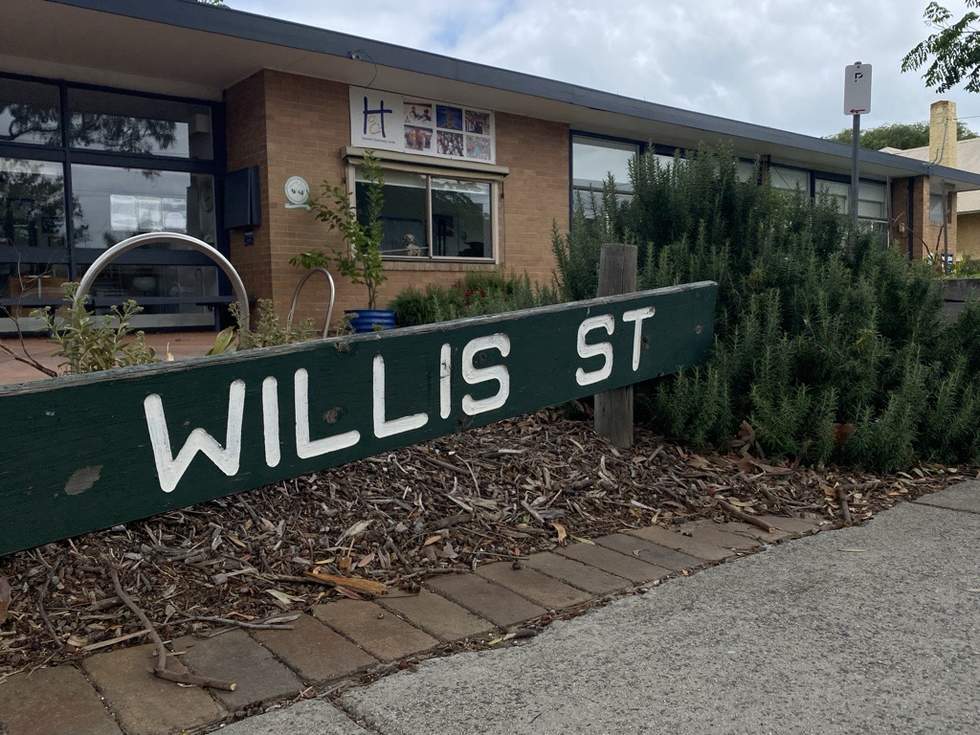
(Melway reference 76 C1) The Brighton Dunes are a rare remnant dune system and a heritage midden area which runs from Green Point to the Brighton Life Saving Club. They contain one kilometre of indigenous coastal vegetation only 16 kilometres from the Melbourne CBD. The climax plant community is the tea-tree/boobialla one. The area is home to several families of blue wrens, many other birds, at least six species of skinks and has considerable historical interest (the bathing boxes) and archaeological interest (the dunes form the longest continuous midden in Port Phillip Bay). The reserve is named after Dr. Jim Willis, the famous botanist. He regarded the area as so significant that none of it should be destroyed and said Brighton Dunes was:...’So precious, conservationally significant and scientifically valuable is the dune relic that not a square metre of it should be disturbed for any purpose’. Contacts: Jenny Talbot, T: 9592 6474 and Elizabeth McQuire, T: 9592 2109
- Ricketts Point Landside, Beaumaris
(Melway reference 86 C8) Ricketts Point Landside extends along Beach Road in Beaumaris for approximately 600 metres between Haydens Road and Reserve Road. It is ecologically significant because it is the closest landside coastal banksia (Banksia integrifolia) woodland to the city on the eastern side of Port Phillip Bay. The most significant feature of this site is the stand of mature Banksia integrifolia trees in the centre of the site opposite the Ricketts Point Teahouse on Beach Road. Some of these trees are over 200 years old. This stand is being protected by planting understorey species and replacement trees. The Southern brown tree frog (Littoria ewingii) can be heard calling from the southern end of the site. Here the natural depression holds transient water in times of average rainfall. At this end of the site, species such as the swamp paperbark (Melaleuca ericifolia), which prefer damper soil are able to grow. A magnificent view of the bay over the top of the Beaumaris Yacht Club can be seen from local artist Kay Bunnett’s memorial seat on top of the northern embankment at Coral Avenue. In 1999, it was identified that the area was degrading and the Friends group was formed to help preserve and protect this distinctive and well known woodland. Contact: Sue Raverty, T: 9589 2103
- Ricketts Point Marine Sanctuary, Beaumaris
(Melway reference 86 C/D 10) The coastal waters from Table Rock Point in Beaumaris to Quiet Corner in Black Rock and approximately 500 metres to seaward, formally became the Ricketts Point Marine Sanctuary in June 2002. This 115 hectare sanctuary is a series of sandstone rock platforms extending from the shore and creates a diverse marine environment that is readily accessible to visitors. The high diversity of marine habitats within a small area provides a fantastic opportunity for scientific research, education, and also recreation. Marine Care Ricketts Point Inc. is a volunteer group concerned with the well-being of the Ricketts Point Marine Sanctuary. It works in cooperation with Parks Victoria, Bayside City Council and many other interested groups. Active members are interested in such things as mapping the sanctuary, monitoring marine life, marine photography, education, surveillance and compliance, inter-organisational activity, surveys and the natural and human history of the area. The objective is to foster the regeneration of the once abundant plant and animal life so that a thriving marine environment is assured for the future. Contact: Phil Stuart M: 0419 366 513
- Table Rock, Beaumaris
(Melway reference 86 D10) The Friends of Table Rock was formed from members of Beaumaris Conservation Society Inc. to help control the spread of the environmental weed bridal creeper (Asparagus asparagoides) along this part of the foreshore reserve but is open to anyone interested in helping to control all weeds and planting local species. Our area extends along the foreshore reserve from Rennison Street to Keys Street in Beaumaris. Contact: Ken Rendell, T: 9589 4452
- Watkins Bay, Beaumaris
(Melway reference 86 C9) Watkins Bay is also known as Dalgetty Road Beach. It runs from the wooden triangle on the rocks near the Beaumaris Life Saving Club to Table Rock and is part of the Ricketts Point Marine Sanctuary. We mostly work in the lower level of beach park from Tramway Parade to Reserve Road below the cliffs, which are thought to be an ancient coast line. We remove weeds such as mirror bush and veldt grass and in autumn and winter plant indigenous species that are grown at the Bayside Community Nursery. We enjoy the area with a small number of superb fairy-wrens, a species that is dwindling in Bayside, and many species of sea birds that roost on the rock platforms. If you know where to look there are aboriginal wells and middens. We feel privileged to work in such a beautiful area. Contact: Moira Longden, T: 9589 2725
- Elsternwick Park, Elsternwick
(Melway reference 67 D5) Since 2005, the Port Phillip EcoCentre (based in St Kilda Botanical Gardens) has engaged a disability group from Central Bayside Community Health Services in its environmental programs. The New Environment Directions group is called NED. With EcoCentre support, NED began monthly bird surveys and bird photography at Elsternwick Park lake in February 2008. The surveys have the potential to inform future management strategies for the park. In addition to the wetland habitat values, the opportunity to monitor the influence of diversified tree planting to accommodate small bush birds (which may be currently eliminated from the area by noisy miners) is of particular interest. NED is a registered Friends group in Bayside and conduct planting to improve bird habitat in Elsternwick Park. Quite a few members have been regular volunteers at Westgate Park over the past two years and are experienced in planting and mulching. Apart from the positive environmental outcomes, one of our aims with the program is to get the group to meet other members of the community to help develop their social networks. Contact: Neil Blake, T: 9534 0413
- Bayside Environmental Friends Network (BEFN)
The Bayside Environmental Friends Network provides a forum for Friends to discuss ideas and exchange knowledge, skills and experience, to network with others in Bayside and beyond, and to plan events and publicity and work on developing the Friends of Bayside program. All Friends members and other interested people are welcome to attend meetings. Contact: Barbara Jakob, M: 0408 032 963
- Banksia Bulletin
As part of its support of the Friends of Bayside, Bayside City Council produces a quarterly environmental magazine, the Banksia Bulletin. The majority of articles in the Banksia Bulletin are written by Friends. It contains short articles, photographs and stories to inform all about the Bayside environment. If you would like to be added to the Banksia Bulletin mailing list and receive either a postal or electronic copy, please send your contact details to: banksia@bayside.vic.gov.au
If you would like to join an existing Friends group or are interested in starting a new Friends group, contact Council's Service Provider Citywide Parkcare on 9583 6700.
For more information regarding Friends groups in Bayside, please contact Bayside City Council on 9599 4444.
22-Apr-2009
|
|
|